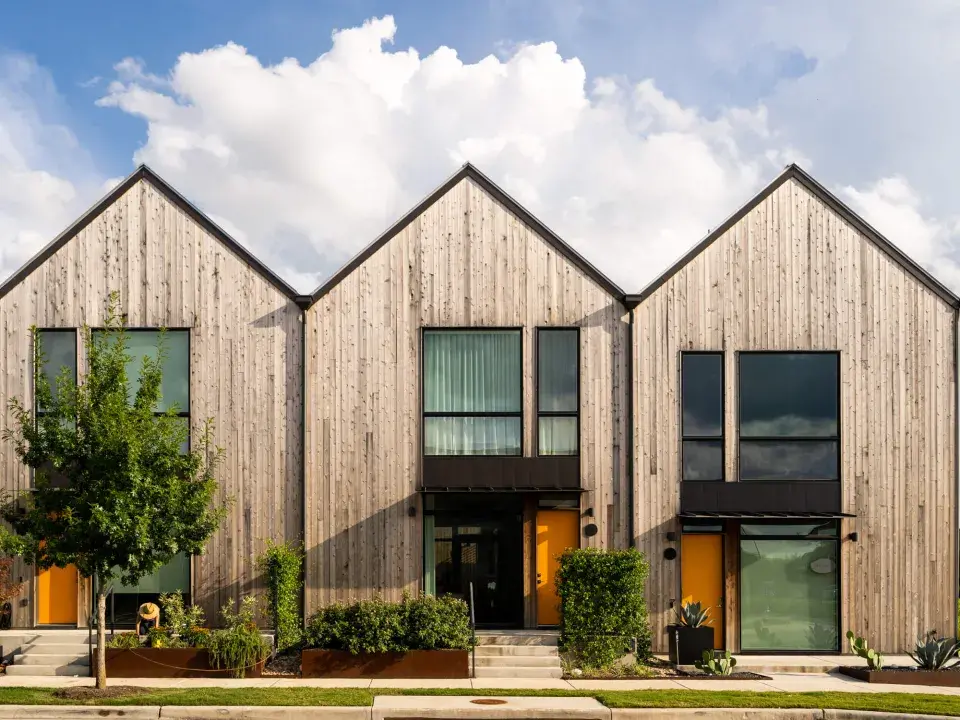
While there is no single, agreed upon definition of low-density multifamily (LDMF) housing, our research describes LDMF development as the type of housing with a density that falls between traditional single-family development (a detached unit designed to be occupied by one household that sits on its own parcel of land) and high-density multifamily development (broadly defined as having a large number of housing units in relation to the construction site’s total area/size, thereby maximizing land use). Where it falls on the spectrum depends on the area’s residential development patterns.
Since single-family—only zoning contributes to housing supply scarcity, which has a spillover effect on home sales and rent prices, permitting LDMF housing in areas previously reserved for single-family development could positively impact a market’s supply and affordability challenges. However, scaling LDMF housing requires addressing the regulatory and financial barriers to creating this type of housing.
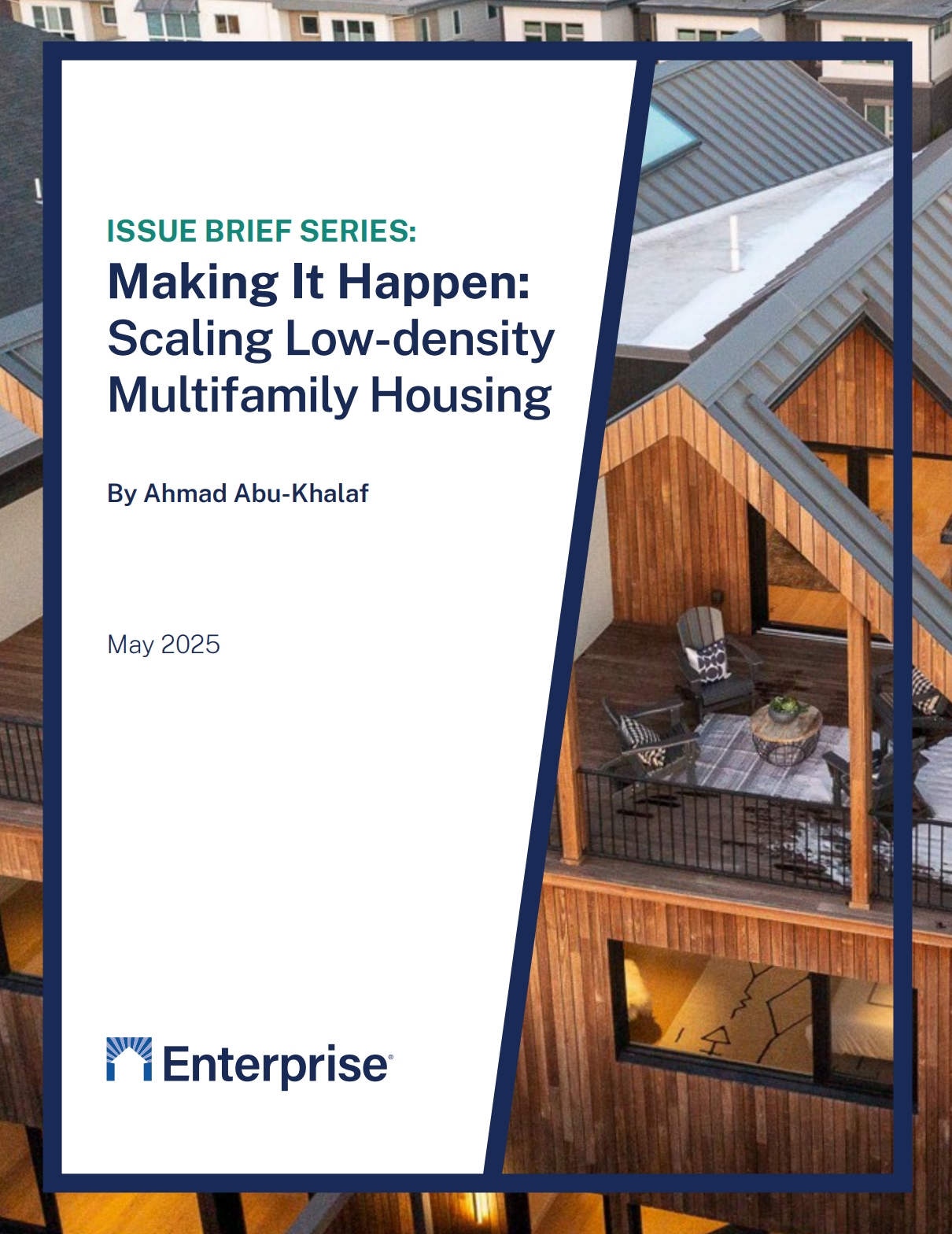
Since releasing a paper on this strategy in 2020, several jurisdictions and private entities have taken steps to make it easier to build LDMF housing. In a new issue brief — Making it Happen: Scaling Low-density Multifamily Housing – the third in a series focused on opportunities to scale affordable housing innovations — we discuss opportunities to scale affordable housing innovations, including regulatory reforms designed to facilitate the development of some forms of LDMF housing and recent lending products tailored to financing LDMF development.
The Learning Center’s resources and all data and information provided therein (collectively, “Content”) are for general informational purposes only. All Content is provided “as is” and may no longer be current or up to date. Enterprise Community Partners, Inc., its subsidiaries and affiliated entities (collectively referred to as “Enterprise”) as well as any co-authors of any Content disclaim all liability for any errors or omissions and make no warranties or representations of any kind, either express or implied, regarding the accuracy, adequacy, validity, reliability, availability, or completeness of any Content presented. All Content should be independently verified by you before relying on it. The Content does not constitute professional advice or services (including but not limited to legal, financial, tax, or investment advice).

- Brief