Like much of the affordable housing sector, tribal housing in California faced mounting obstacles in 2025. Housing development work remained understaffed and underfunded, with several tribes experiencing leadership turnover and staffing gaps tied to economic distress in tribal areas. Federal funding uncertainty created additional strain, particularly HUD Continuum of Care BUILDS delays that forced tribes to seek alternative funding and absorb cost overruns.
The California Tribal Housing Accelerator Academy became more critical than ever in this challenging environment. In its second year, the program offered something increasingly rare: comprehensive training, expert technical assistance from Native-led consultants, and pre-development grants to advance housing goals. For tribes navigating an unstable funding landscape, this support provided both practical tools and financial breathing room to keep housing development moving forward.
"We hope in the long term to have more options available to our tribal members and their housing needs as a result of the work done this year.
-Darlene Crabtree, Finance Manager, Round Valley Indian Housing Authority
Building on Successes
The 2025 academy built on the first year's success, expanding its approach with both in-person comprehensive training and additional online sessions to address gaps identified in the previous curriculum. Direct technical assistance came from Native-led consultants: Mosaic Urban Development, LACO Associates, and Beaux Simone Consulting.
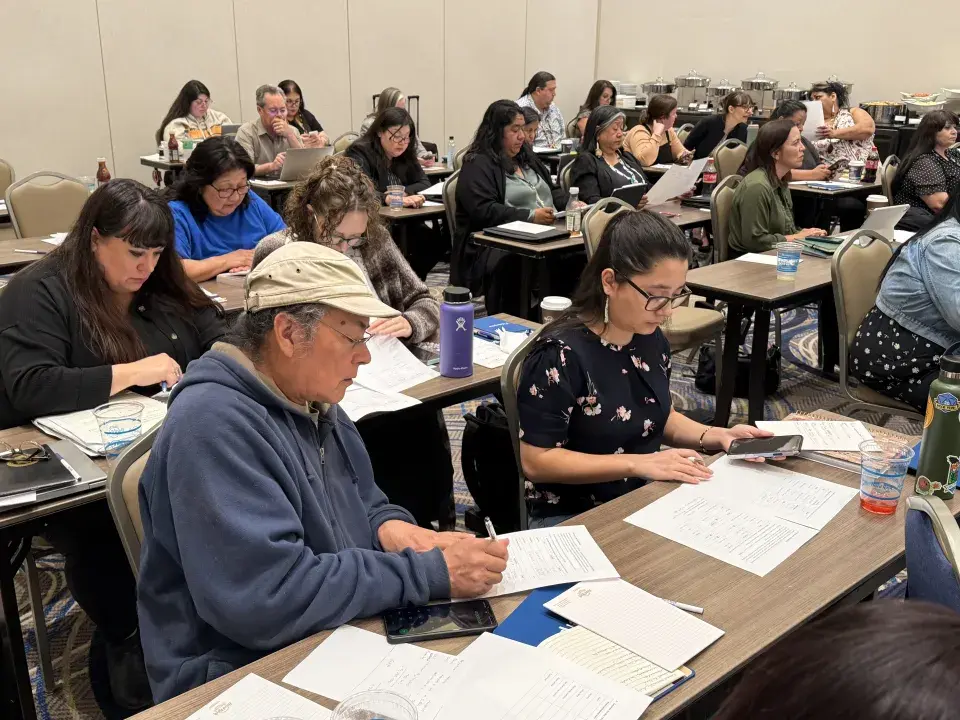
This programming kicked off in March with Affordable Housing 101 at the tribally owned Hard Rock Casino in Sacramento to provide essential knowledge in development. The in-person session also offered the opportunity to connect with peers, build relationships, and engage with a network of technical assistance providers.
The 2025 academy cohort reflected California's diverse tribal housing landscape, with nine participating groups ranging from non-federally recognized tribes to those planning homeownership programs or operating without formal reservation land. The results were strong: tribes with limited experience successfully submitted state and federal funding applications, and two advanced to second-phase housing development.
Strong Applications for Funding to Advance Housing Goals
In total, five tribes submitted strong applications for funding and advanced their housing goals thanks to 320 hours of direct technical assistance. Leveraging their work with the academy, California tribes applied for about $24.6 million in funding during the 2025 program, including federal HOME Investment Partnership grants, HOME partnership funds for owner and renter rehabilitation, a state Homekey grant for new construction serving those at risk of homelessness, and a state tribal homelessness grant.
Overall, 117 future housing units were assisted through this program, whether a funding source was secured or not.
The academy training was made possible with the generous support of U.S. Bank, and the James Irvine Foundation provided $10,000 pre-development grants to help each participating tribe advance their housing goals.
The pre-development mini grants were used toward creative housing solutions, including:
- Big Valley Rancheria conducted an appraisal of an underutilized 14-cottage hotel adjacent to the rancheria, with the prospect of converting to transitional housing
- Cloverdale Rancheria, new to the housing space, surveyed tribal members to determine future housing priorities and demonstrate need
- Round Valley conducted a record of survey to establish land use legalities to move forward with a $10 million Homekey grant from the California Department of Housing and Community Development
- Two Feathers Native American Family Services used their grant for consultants and service providers to help develop housing and support services for tribal youth
In Their Own Words
The value of the academy is not only captured in units of housing, hours of technical assistance, or amount of funding received, but it also includes the lessons learned along the way.
Our tribal partners spoke to the value of the California Tribal Housing Accelerator Academy. One survey respondent shared, "We used the TA to allow for pre-development planning. This allowed us a financial pathway for the project."
The academy's impact showed up in the connections tribes made and the confidence they gained. Nearly all participants reported speaking with colleagues about new housing strategies and forming new partnerships for affordable housing development.
And most importantly, academy members weren't just learning—they were doing. Nearly two-thirds completed funding applications for acquisition, rehabilitation, or new construction, transforming knowledge into action and moving their communities closer to the homes that tribal families need.