Florida’s affordable housing crisis is growing more urgent by the day. Families are increasingly priced out of their neighborhoods. Educators, young professionals, first responders, service workers, and many others endure long commutes. Local communities are losing the very people who make them work.
Last year, Florida took an important step toward a new kind of solution, one that taps into an unexpected but significant partner: faith-based organizations.
Houses of worship are among the largest landholders in many communities. In cities and small towns alike, their underutilized land often serves as oversized parking lots or remains entirely vacant.
In 2025, the State Legislature passed Senate Bill 1730, creating Florida’s new “Yes in God’s Backyard” (YIGBY) law. This landmark legislation gives local governments the ability to approve affordable housing on eligible land owned by religious institutions, even if that land isn’t currently zoned for residential use.
Local governments can set their own development standards for density, height, setbacks, and parking — all while ensuring at least 10 percent of the homes meet affordability standards.
According to a recent analysis by the Florida Housing Coalition, the new law has the potential to unlock over 30,000 parcels across the state. But, crucially, YIGBY is optional. Cities and counties must choose to use it by enacting legislation.
St. Petersburg Paves the Way on Policy
Late last year, St. Petersburg was the first locality in Florida to pass an ordinance activating the state’s YIGBY law. Now affordable housing can be built on land owned by a religious institution that contains a house of worship if either all homes are affordable at 120% AMI or below, or if at least 30% offer even deeper affordability.
This ordinance leverages the flexibility of the statewide law, allowing St. Pete’s to address local needs, and other jurisdictions across the state should follow suit.
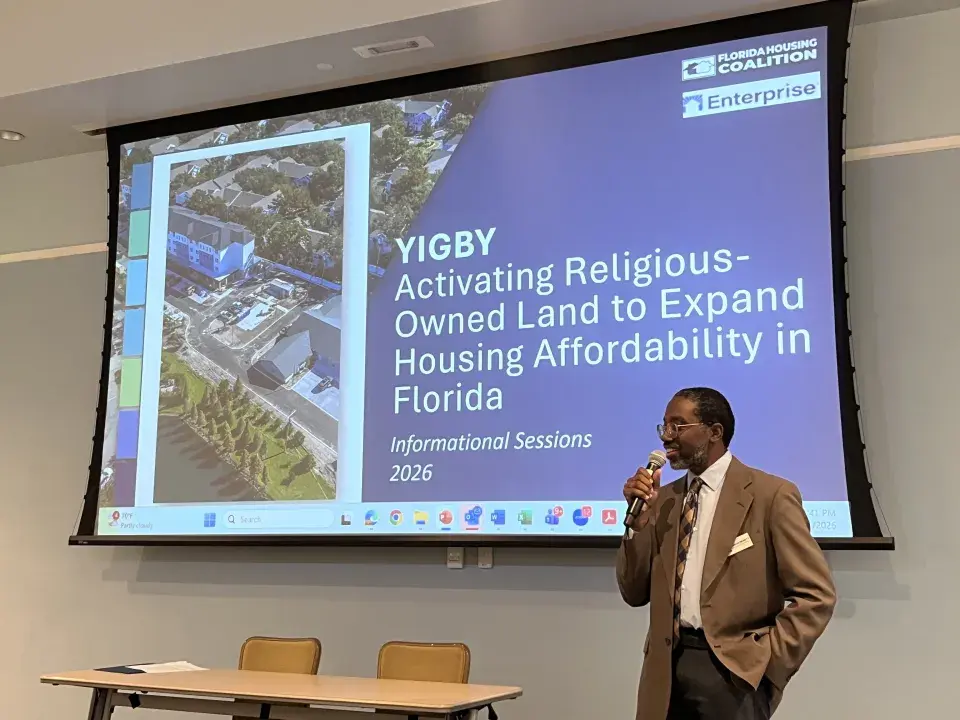
This year, Enterprise and the Florida Housing Coalition have partnered to bring this message across the state, launching a road show to help local officials, faith leaders, and housing advocates learn how to leverage the YIGBY law. From Pompano Beach to Orlando to Panama City, our goal is to equip communities with the tools and knowledge to scale faith-based housing development statewide.
Bridging the Knowledge Gap with Technical Assistance
Policy alone won’t turn a vacant church parking lot into affordable homes. Many congregations are eager to serve their communities beyond Sunday mornings, but few have the technical expertise to navigate complex development processes.
The Enterprise Faith-Based Development InitiativeSM (FBDI) works with over 150 houses of worship across the country, including in Miami, Atlanta, Charlotte, New York City, Houston, Dallas, and more. Faith leaders receive real estate development training, technical assistance, and access to capital to help them transform underused land into affordable housing.
All together, they are projected to produce more than 9,000 affordable homes.
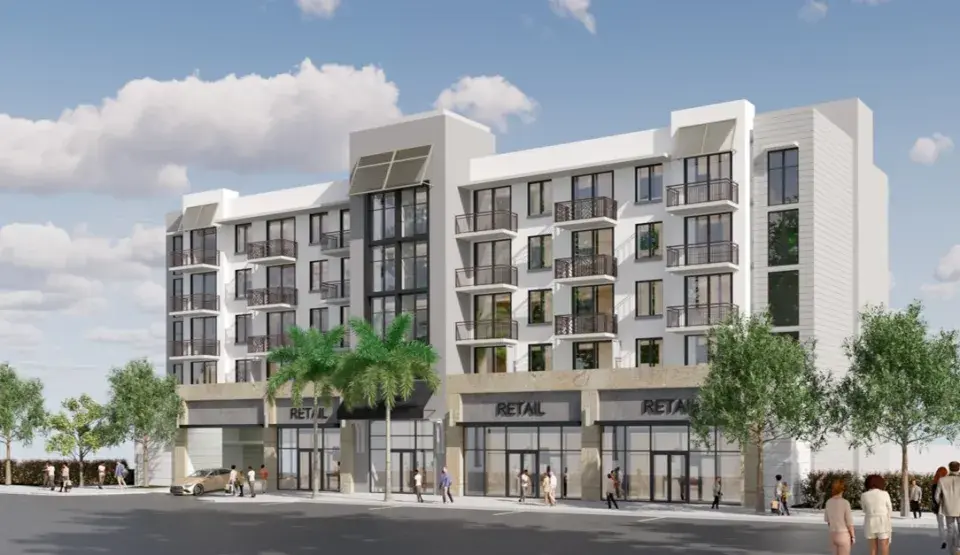
Believers of Authority Ministries in Miami, for example, is one house of worship leveraging FBDI training and tools to develop Grand Bahamas Place, 56 affordable micro-condominiums, retail space, and a multipurpose community space on an empty lot behind their church.
They are working with Prosperity Partners, a partnership between PROSPERA Real Estate and Collective Empowerment Group of South Florida, which has extensive experience partnering with churches to transform land into revenue and a projected pipeline of more than 2,000 housing units.
Houses of worship may also access additional financial support through Florida's Predevelopment Loan Program with assistance from the Florida Housing Coalition, which helps cover up-front expenses required for development approval such as architectural design and environmental reports.
When faith communities have the right tools, they can become powerful housing partners. They bring trusted relationships, deep knowledge of the community, and land to the table.
An Invitation to Communities
States and localities across the country are advancing YIGBY policies that unlock land owned by faith-based organizations, we invite Florida policymakers to unlock the state’s YIGBY legislation by adopting ordinances like St. Pete’s— a clear, predictable path to building affordable housing on land owned by houses of worship. We call on developers and financial institutions to partner with faith-based organizations ready to build. And we call on philanthropy and civic leaders to support the technical assistance and early-stage capital needed to help faith leaders take on development for the first time.
By unlocking their land, removing barriers, and forging new partnerships, we can take a major step toward a more affordable, inclusive future for all Floridians.
Dr. Christie Cade is Vice President and Southeast Market Leader at Enterprise Community Partners. Ashon Nesbitt is CEO of the Florida Housing Coalition.