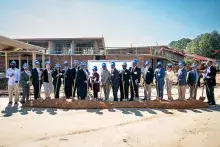
Enterprise announced $23.7 million in Phase 2 funding to support 32 Detroit nonprofits that serve or are led by Black, Indigenous and People of Color (BIPOC) through two foundation-backed initiatives, the Community Development Organization (CDO) Fund and Elevating Community Development Organization (ECDO) Fund.
Across the country and in Colorado, we simply cannot build our way out of the affordable housing crisis. Preserving our supply of currently affordable homes is an essential strategy to one day ensure everyone can stably afford a home in their own community.
In addition to building new homes, we must also preserve the affordability of currently affordable rental homes through recapitalization, acquisition, rehabilitation, and adaptive reuse.
Our new 3-year DEI strategic plan outlines what we will do to increase and improve the participation of diverse suppliers, service providers, and partners to our work.
As several housing measures move forward in Colorado, our Rocky Mountain Policy Director Kinsey Hasstedt asserts that lifting the state's occupancy limits will help alleviate the affordable housing crisis and the households of color it impacts most.
The Low-Income Housing Tax Credit, otherwise known as the Housing Credit, is the nation’s number one tool for financing the production and preservation of affordable rental homes. So how can we expand access to this crucial tool for economically and socially disadvantaged and other historically marginalized housing providers?
While continued market uncertainty could cloud the outlook for affordable housing and community development in 2024, Enterprise leaders see reasons for optimism and the potential for significant opportunities. “Despite sustained headwinds over recent years, there are positive signs ahead,” said Scott Hoekman, president of Enterprise Housing Credit Investments. We spoke with Hoekman and other Enterprise capital experts about affordable housing and community development trends this year.
Our 2023 FBDI Annual Summit will look at how faith-based community development has continued to grow and evolve, particularly in response to the pandemic.