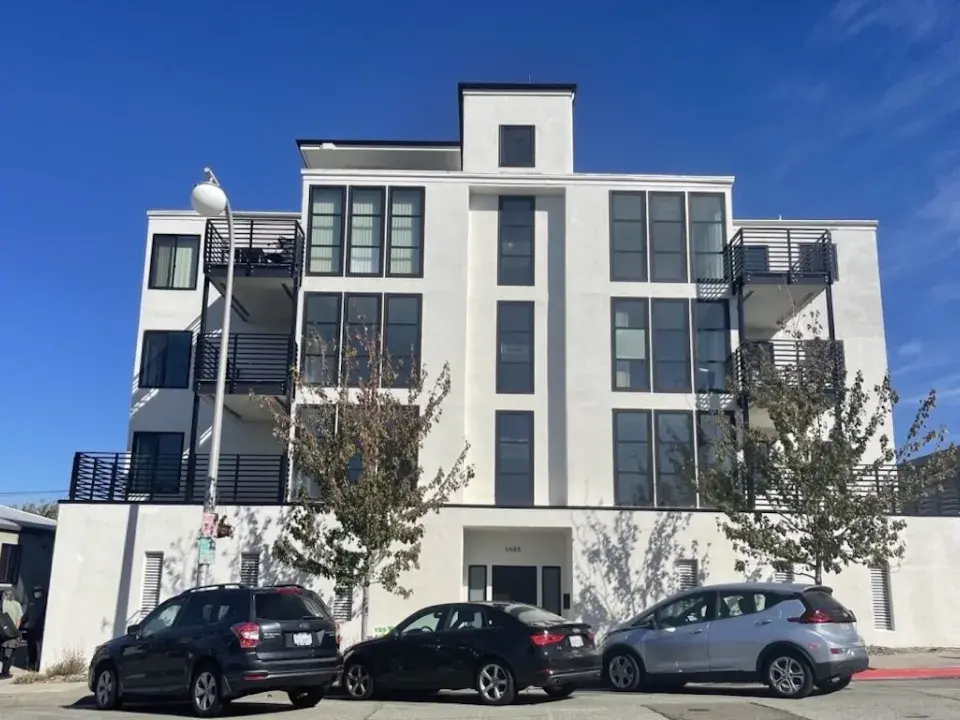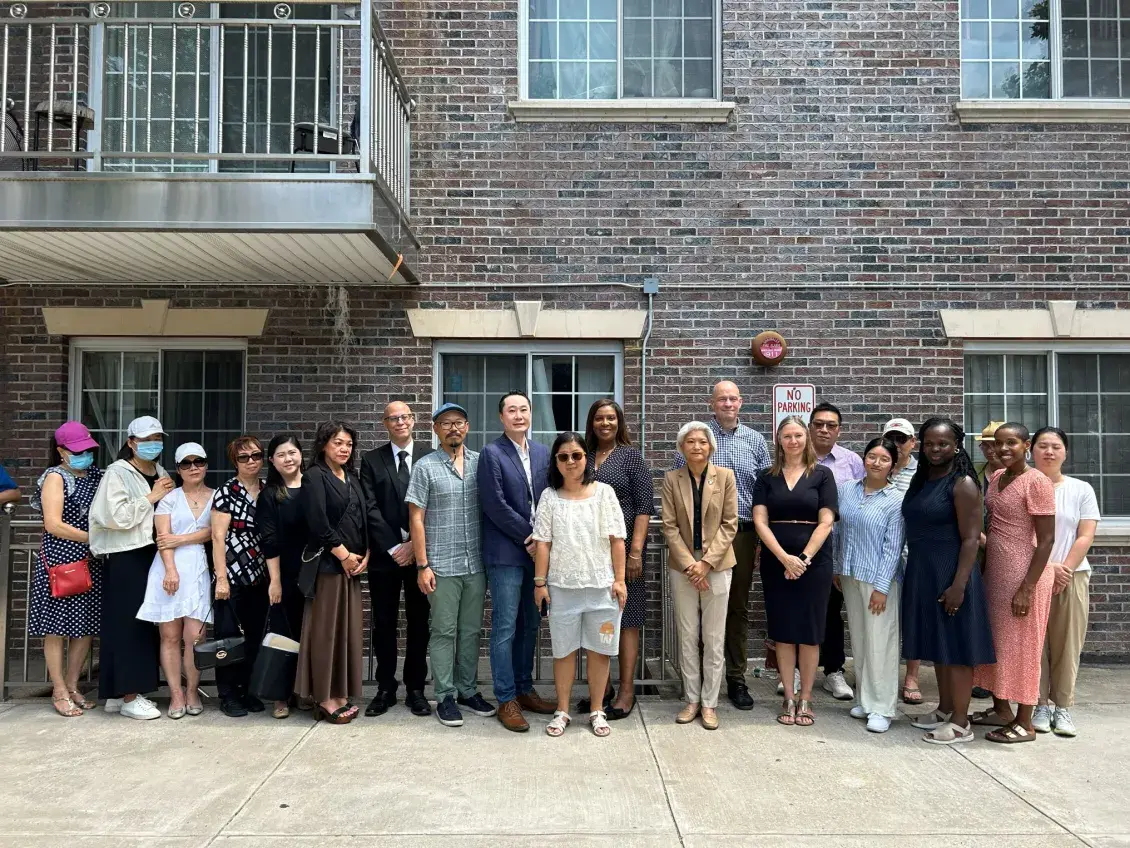
In Bay Ridge, Brooklyn, 20 families were on the brink of losing everything. They had each invested tens of thousands of dollars in condominium deposits, believing they were purchasing homes of their own. Instead, the property’s developer fled the country, leaving them without legal ownership and facing imminent foreclosure.
Now, residents of that property on Ovington Avenue are on the path to homeownership, safe from the threat of foreclosure and displacement — and Asian Americans for Equality (AAFE) continues to fight for housing stability and opportunity for immigrant families across New York City.
A Mission Born from Activism
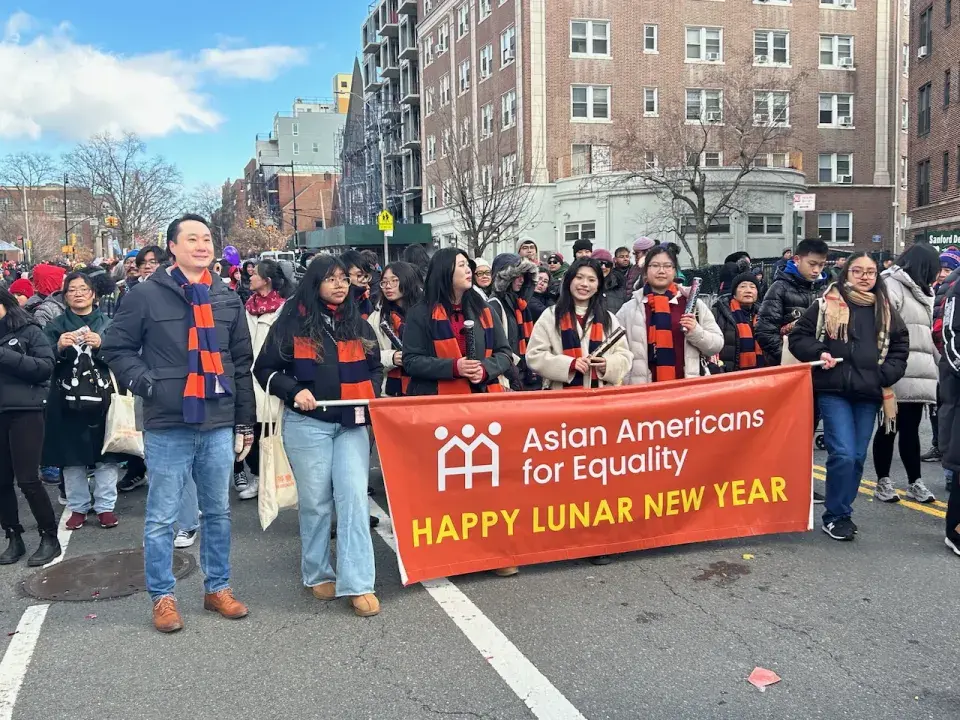
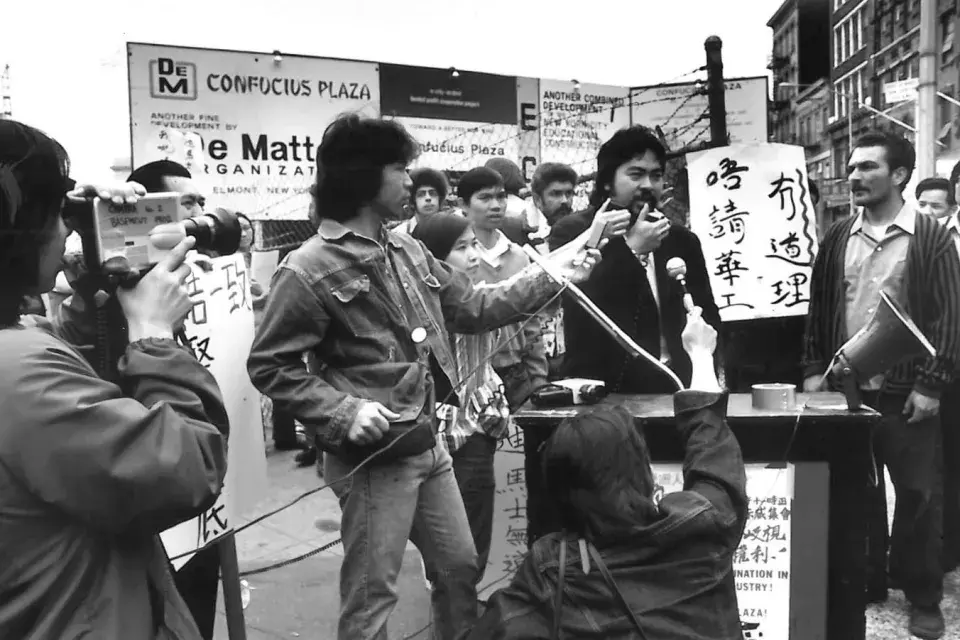
AAFE’s roots stretch back to the early 1970s, when the organization was founded as a tenant rights and civil rights group advocating for Asian Americans amid a surge of gentrification and tenement buyouts. In its early years, AAFE’s work centered on community organizing, tenant protections, and defending families against displacement.
Over time, the group expanded into direct housing development, lending, and economic empowerment. Today, AAFE operates neighborhood offices in Manhattan and Queens, offering multilingual counseling and education programs for low-income tenants, seniors, and immigrant youth. Through its affiliate, AAFE Community Development Fund, the organization provided counseling and down payment assistance to enable homebuyers to obtain more than $450 million in mortgage financing. Through a second affiliate, Renaissance Economic Development Corporation, AAFE offers low-interest loans and training programs for immigrant entrepreneurs.
“Most of AAFE’s development projects arise from a specific community need in a neighborhood or community where AAARE has been providing services, such as tenant organizing or lending and economic development work,” said Thomas Yu, AAFE’s executive director. “We do the homework, engaging with local stakeholders and community members before we design a project.”
This commitment to community-driven solutions has made AAFE one of the city’s most trusted developers and advocates for affordable housing — and the driving force behind the rescue of Ovington.
From Crisis to Cooperative
The Ovington case presented a complex challenge. The developer had no legal authority to sell the residential units, and when the lender-initiated foreclosure proceedings, eviction loomed.
With no ready-made funding mechanism to save the building, AAFE had to act quickly. The organization pieced together a capital structure by working closely with the New York City Department of Housing Preservation and Development’s Open Door Program, New York State Homes and Community Renewal’s Affordable Housing Opportunity Program, Enterprise, and other stakeholders. This collaboration allowed AAFE to purchase the building and convert it into an affordable cooperative owned and managed by its residents.
Enterprise Community Loan Fund provided a $12.1 million loan for acquisition and predevelopment costs, serving as critical gap financing that made the preservation effort feasible. Today, the building is no longer at risk of foreclosure, and the residents who nearly lost their life savings will soon become homeowners.
“[Residents] had handed over their life savings,” Yu said. “Enterprise made this project possible when there was nothing left for the tenants.”
A Preservation Partnership
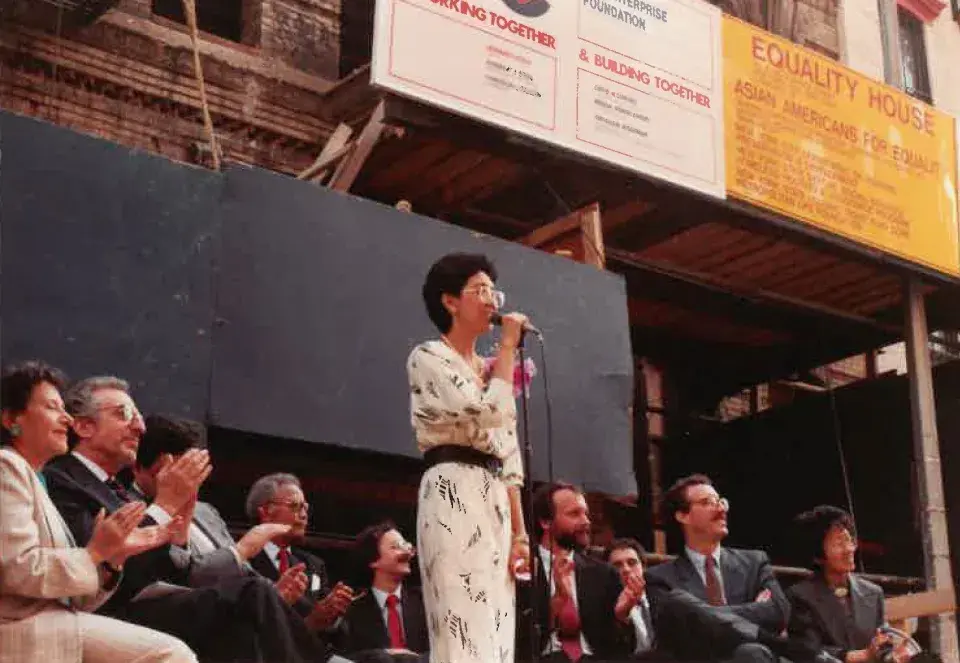
AAFE and Enterprise’s partnership stretches back nearly four decades. It began in 1985, when a fire displaced 125 residents in New York’s Chinatown. AAFE acquired two dilapidated buildings in the neighborhood and, with support from Enterprise and Fannie Mae, piloted a new financial tool to rehabilitate them as affordable homes. The resulting development, Equality House, became AAFE’s first affordable housing project — and New York City’s first property financed by the Low-Income Housing Tax Credit.
Since then, AAFE has relied on flexible, early-stage capital to advance its preservation work. “On projects like Ovington, the predevelopment period can be lengthy,” Yu explained. “We rely on Enterprise Community Loan Fund as our trusted capital partner during these critical early stages as we wait for construction and permanent funds to flow in.”
Preservation has also become a focus for Enterprise Community Loan Fund. In the 2024 Social Return on Investment Report, Enterprise highlighted preservation as one of the most cost-effective and impactful ways to address the housing crisis, particularly in areas with high housing demand.
This is how we keep families in their homes and communities intact. Partners like AAFE are leading the way in finding creative solutions — from adaptive reuse to cooperative conversions — that can be scaled to meet the urgent need.
Elise Balboni, executive vice president and head of Lending and New Markets Investments at Enterprise
Since 2022, Enterprise Community Loan Fund has provided $29.4 million in financing to support four AAFE projects, helping to create and preserve 116 units of affordable rental and for-sale housing. Recent projects include a $7.6 million construction loan for a 45-unit East Village development, including eight units of permanent supportive housing, and a 50 percent participation in an $8.2 million loan for a 26-unit affordable cooperative in Chelsea. Both are being built to Enterprise Green Communities standards to ensure long-term sustainability and lower utility costs for residents.
The Loan Fund also recently issued a $1.3 million permanent loan to preserve a 20-unit affordable property on the Lower East Side and continues to provide AAFE with a line of credit to cover predevelopment expenses and operating costs.
From its first collaboration with Enterprise nearly four decades ago to today’s innovative preservation work, AAFE has proven that mission-driven organizations and flexible capital can solve even the most complex housing challenges. The Ovington project embodies the power of this approach: turning a moment of crisis into an opportunity for stability and ownership.