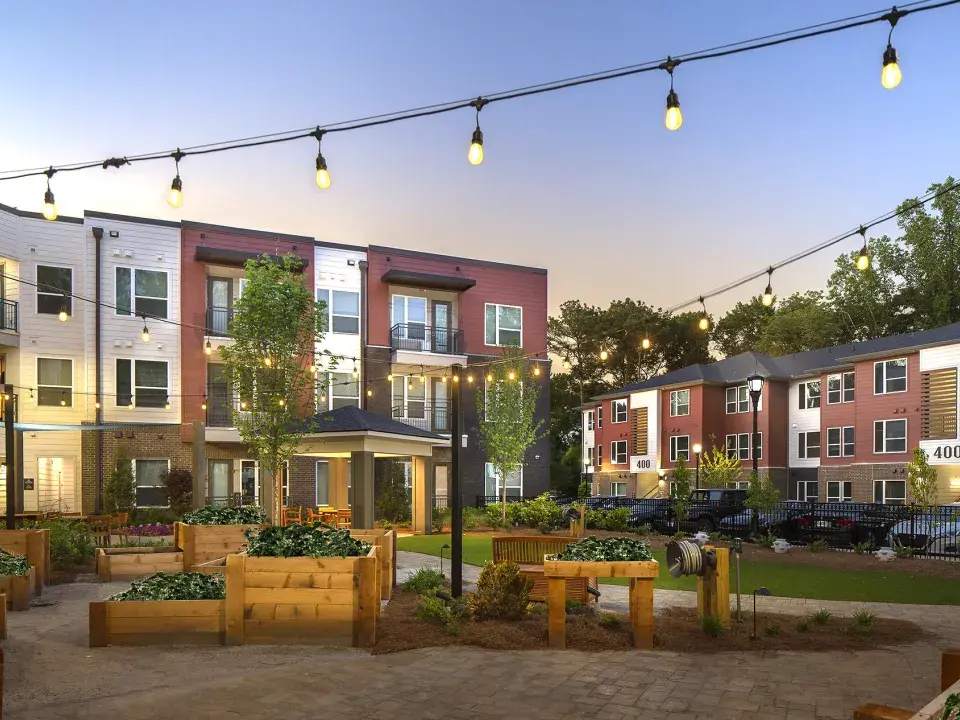
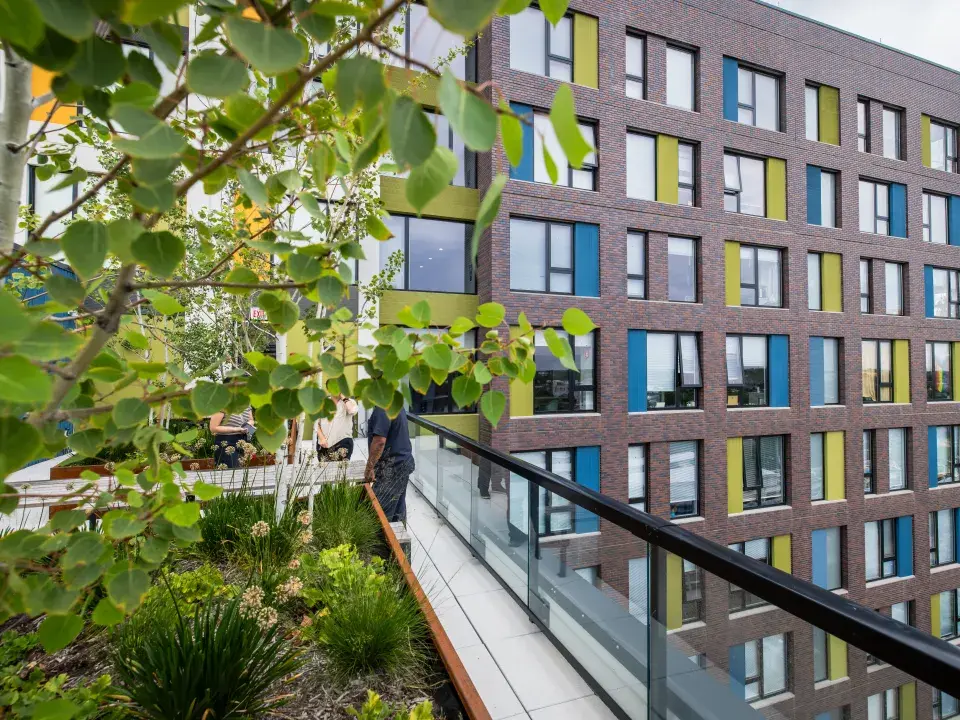
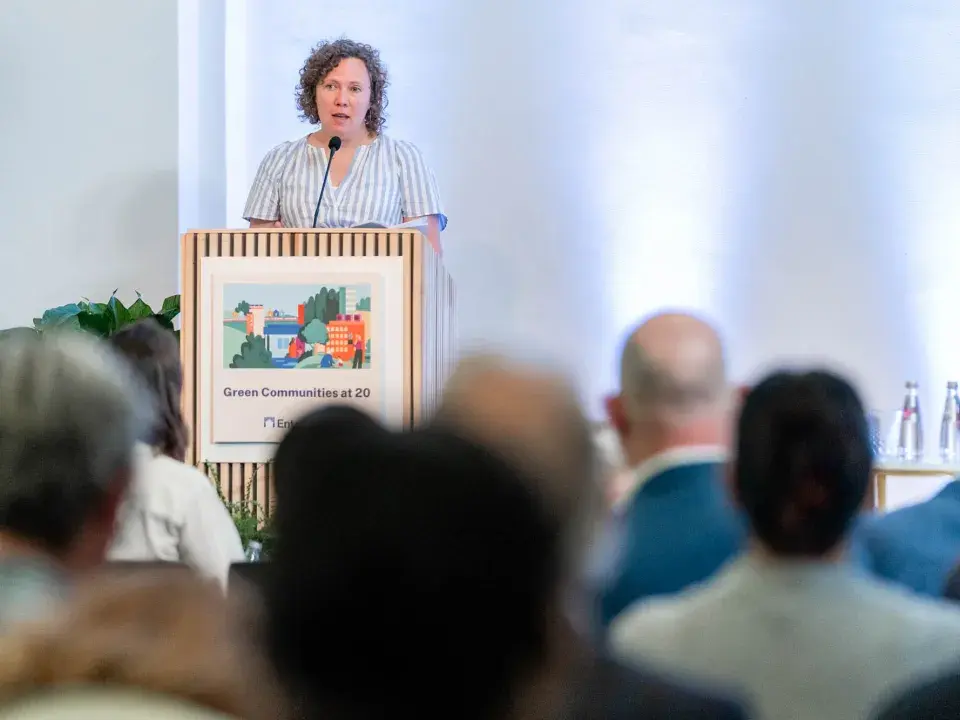
COLUMBIA, Md. – Enterprise Community Partners (Enterprise) today launched the 2026 Enterprise Green Communities Criteria (Criteria), marking two decades of advancing sustainable affordable housing. Grounded in the three core themes of energy, health, and resilience, this year’s edition sets a new standard for building green – affordably – nationwide.
First introduced in 2005, Enterprise Green Communities was created to prove that housing can be both green and affordable, while expanding access to healthier, more resilient homes. Since then, Enterprise has provided training and technical assistance; offered debt financing, equity, and grant products; and partnered with HUD and state housing finance agencies to embed green building incentives and requirements into public funding systems. Currently, 29 states and several cities require or incentivize publicly funded developments to meet the Enterprise Green Communities Criteria.
“Twenty years ago, many believed green building was a luxury reserved for market-rate housing,” said Shaun Donovan, CEO of Enterprise Community Partners. “Our Green Communities Criteria proved that wasn’t true and made it possible for families in affordable homes to reap the financial and health benefits of environmentally sustainable homes. Today, this national green building standard continues encouraging development that is healthy, lowers energy bills for residents and housing providers, and is built to last in the face of a changing climate.”
Residential and commercial buildings account for 36% of global energy use and 39% of carbon dioxide emissions annually. The 2026 Criteria provides a cost-effective, above-code framework to help keep housing affordable for residents while allowing affordable housing providers to reduce emissions and control long-term operating expenses. Criteria-certified homes typically cost about 2% more to build but achieve simple payback through utility savings in less than seven years. Amid rapidly rising utility costs nationwide, on-site energy generation and efficiency upgrades are vital solutions.
In addition to the three themes, significant changes in the 2026 Criteria include:
- Three levels of achievement – Green Communities Certification, Certification Plus, and Certification Plus Zero Emissions – that meet developers where they are, while offering clear pathways to pursue leading-edge design
- Streamlined solutions to help developers progress from energy planning to advanced efficiency, to electrification, renewables, and beyond
- New and revamped criteria responding to resident feedback on noise, traffic, and personal and social safety
- Strategies to prepare for and respond to natural hazards like heat waves, power outages, hurricanes, floods, and wildfires
- A fresh approach to green building product selection, encouraging early screening, holistic assessment, and selection of best-in-class materials
“When what you’ve been building is quality, to go for Green Communities certification is not such a big leap. The standards give us a script of what we need to do to reach the next level of quality for our residents,” said Robert Barfield, VP of Construction Services at Columbia Residential, an award-winning Atlanta-based developer, owner, and manager of affordable and mixed-income housing that operates in Florida, Georgia, Louisiana, Tennessee, and Texas. “We're long-term holders of properties. So we need these standards to be sure that our projects will stand the test of time.”
The 2026 update reflects 18 months of engagement with hundreds of partners, including technical, policy, and advisory working groups, as well as workshops and listening sessions with nearly 250 stakeholders. Enterprise also received more than 1,000 public comments and three dozen agency memos during an open comment period to inform the Criteria.
Enterprise Green Communities is one of several initiatives under Building Resilient Futures, Enterprise’s core strategy working to strengthen disaster resilience, increase energy efficiency, and promote healthy buildings nationwide.
About Enterprise Community Partners
Enterprise is a national nonprofit that exists to make a good home possible for the millions of families without one. We support community development organizations on the ground, aggregate and invest capital for impact, advance housing policy at every level of government, and build and manage communities ourselves. Since 1982, we have invested $80.9 billion and created 1 million homes across all 50 states, the District of Columbia, Puerto Rico and the U.S. Virgin Islands – all to make home and community places of pride, power and belonging.